
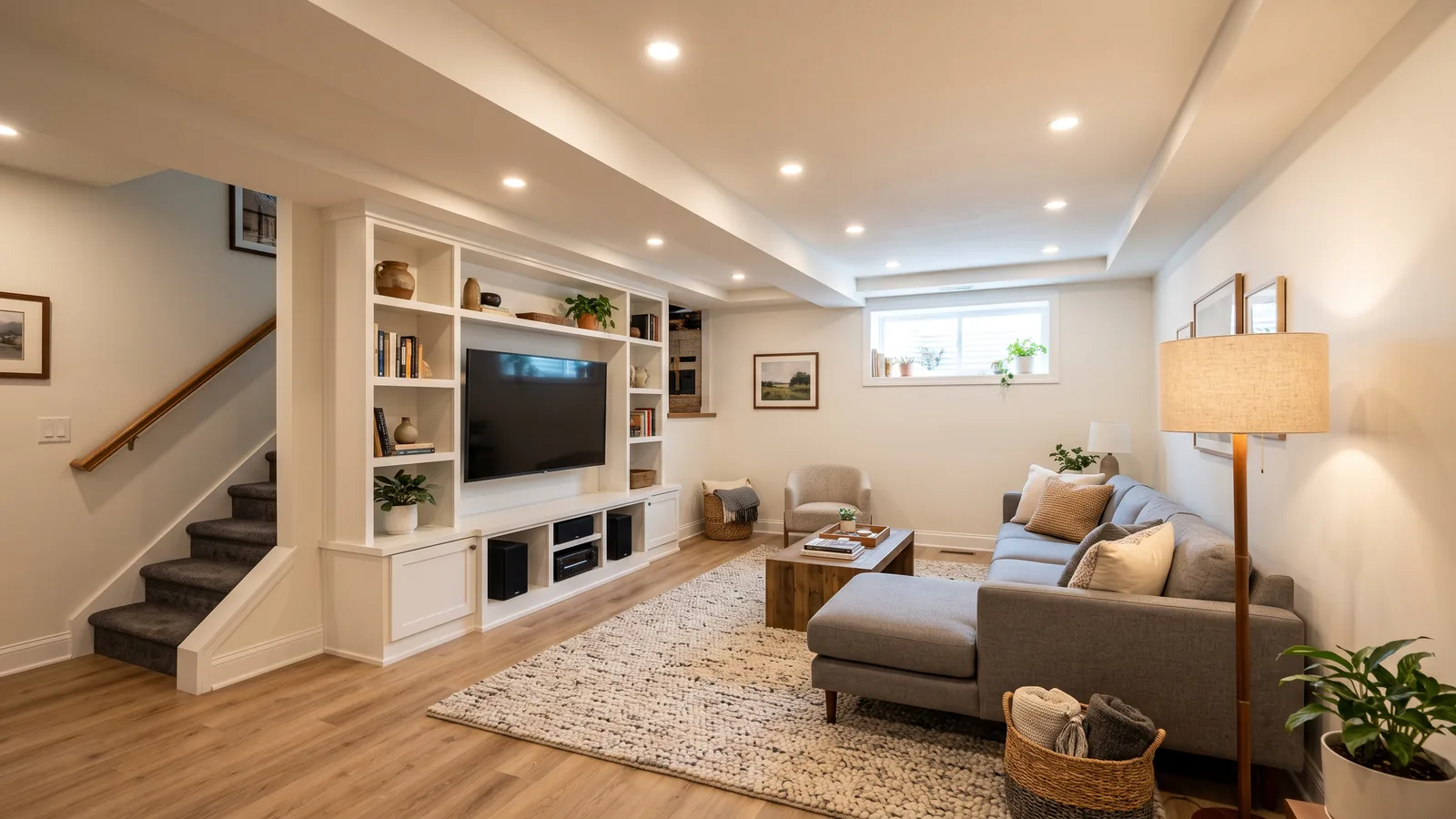
Radon Mitigation Work Before and After You Finish a Basement
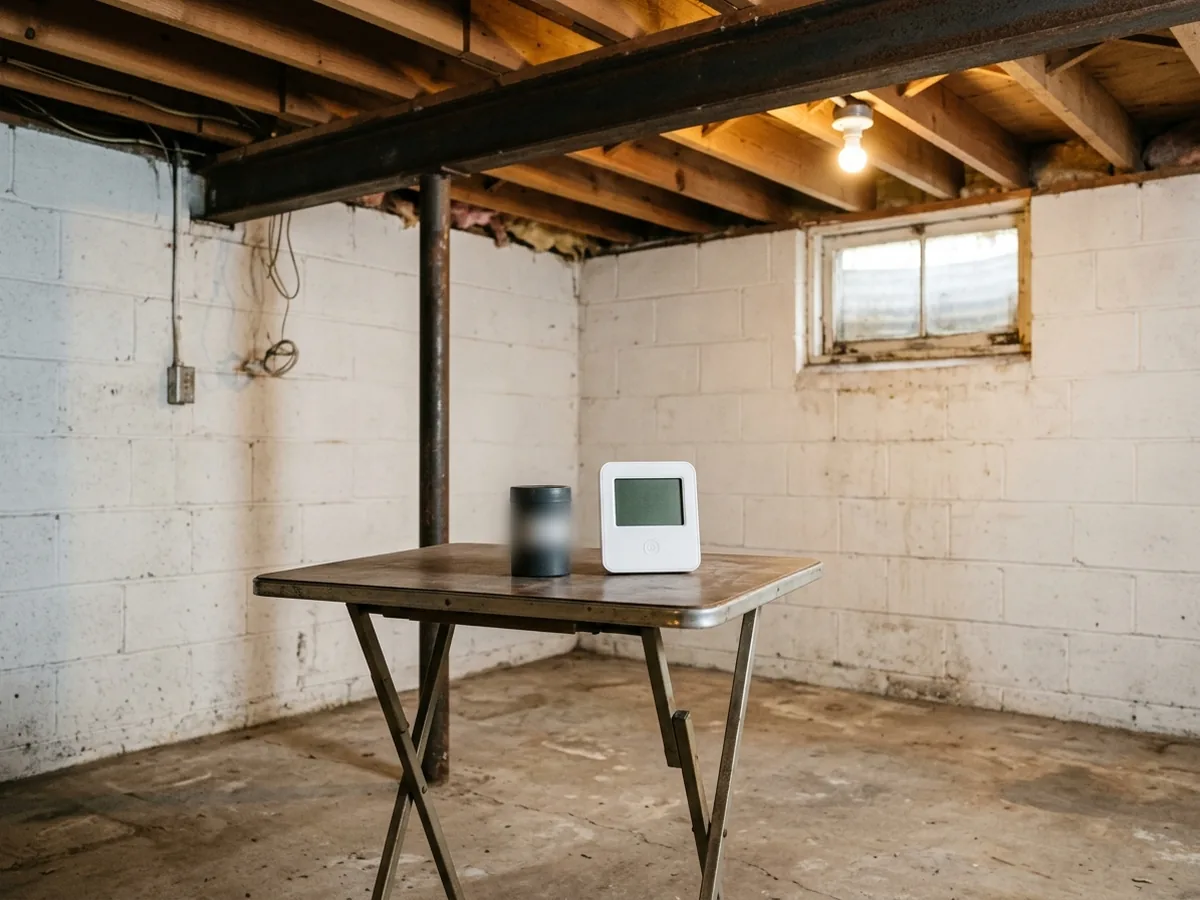
Testing Before and After You Finish
Washtenaw County is in the EPA's Radon Zone 1, the highest-potential zone, and the EPA says all homes should be tested whatever the zone. Michigan EGLE's county table shows 38% of Washtenaw home tests at or above 4 pCi/L, the EPA action level. Statewide, EGLE estimates about 25% of Michigan homes have elevated levels, against about 7% nationally.
The EPA's advice for a basement project is direct: test before you start, test again when it's finished, and test the lowest level you'll use regularly. It also says to consider fixing levels between 2 and 4 pCi/L. Michigan EGLE puts short-term do-it-yourself kits at $10 to $20, long-term kits at $20 to $50 and a professional test at $50 to $150. Our view: if the schedule allows, a long-term kit is worth the wait, because a two-day reading is a snapshot of two days.
Sub-Slab Depressurization Systems
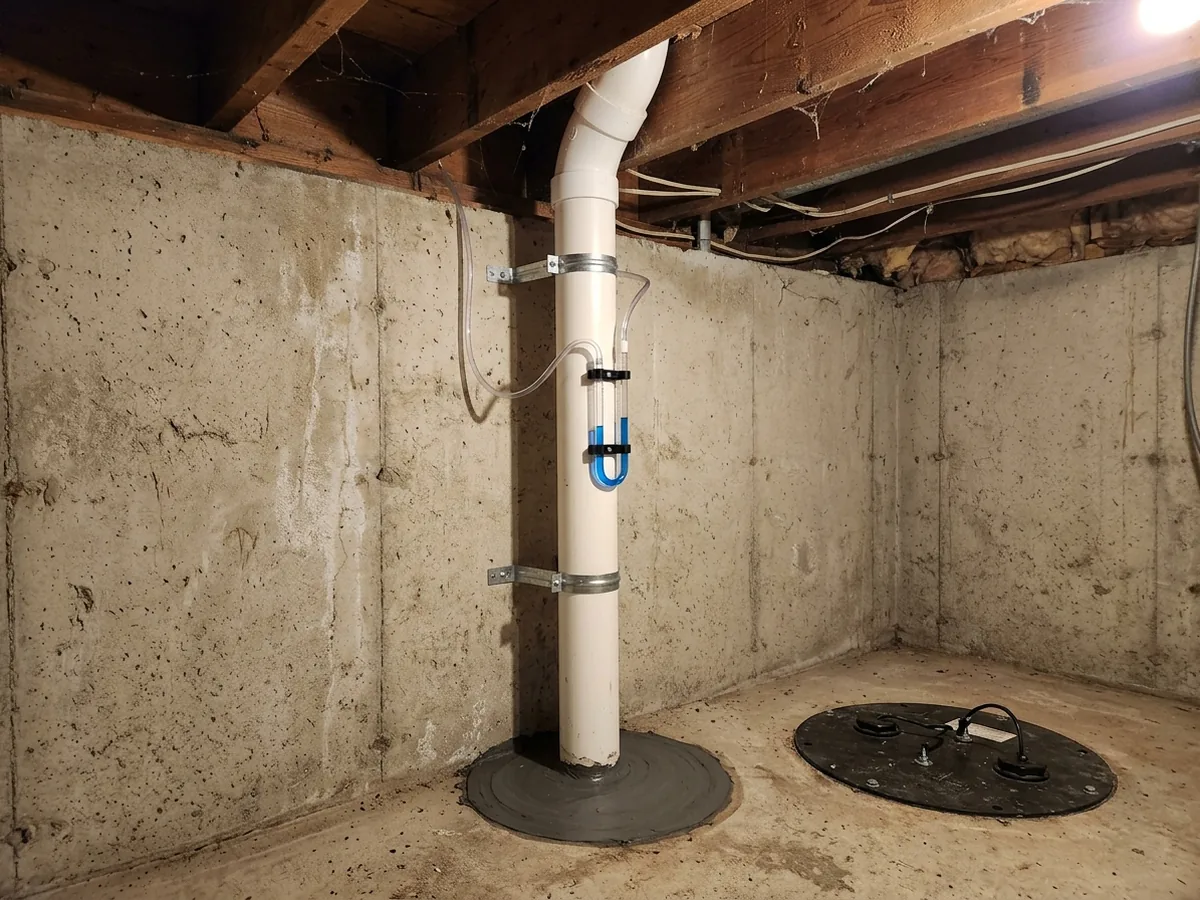
The EPA calls active sub-slab suction the most common and usually the most reliable way to reduce radon. A suction pipe goes through the slab into the gravel or soil below, and a fan pulls soil gas out before it can get into the house. Often one suction point is enough. The EPA's comparison table puts the typical reduction at 50 to 99%.
If your basement has hollow concrete block walls, block-wall suction pulls from inside the cores, usually alongside sub-slab suction. HomeGuide prices block-wall systems at $1,800 to $3,000. Where the house already has drain tile or a perforated footing drain, the EPA says suction on that pipe is often effective, and HomeGuide prices drain-tile suction at $900 to $1,800.
Sealing the Sump Pit and Slab Cracks
Radon can get in through the gravel around a sump pit, as HomeGuide points out. The EPA says a sump can be capped so it keeps draining water while also serving as the suction point. HomeGuide puts sealing around the sump and fitting a cover at $900 to $2,500. Cracks, the joint where the floor meets the wall, and gaps around pipes get sealed as part of most systems, but the EPA doesn't recommend sealing alone, because the entry points are hard to find and to keep sealed. Water control is a separate job; humidity and seepage are on our basement dehumidifier page.
Routing the Pipe and Fan Around a Finished Basement
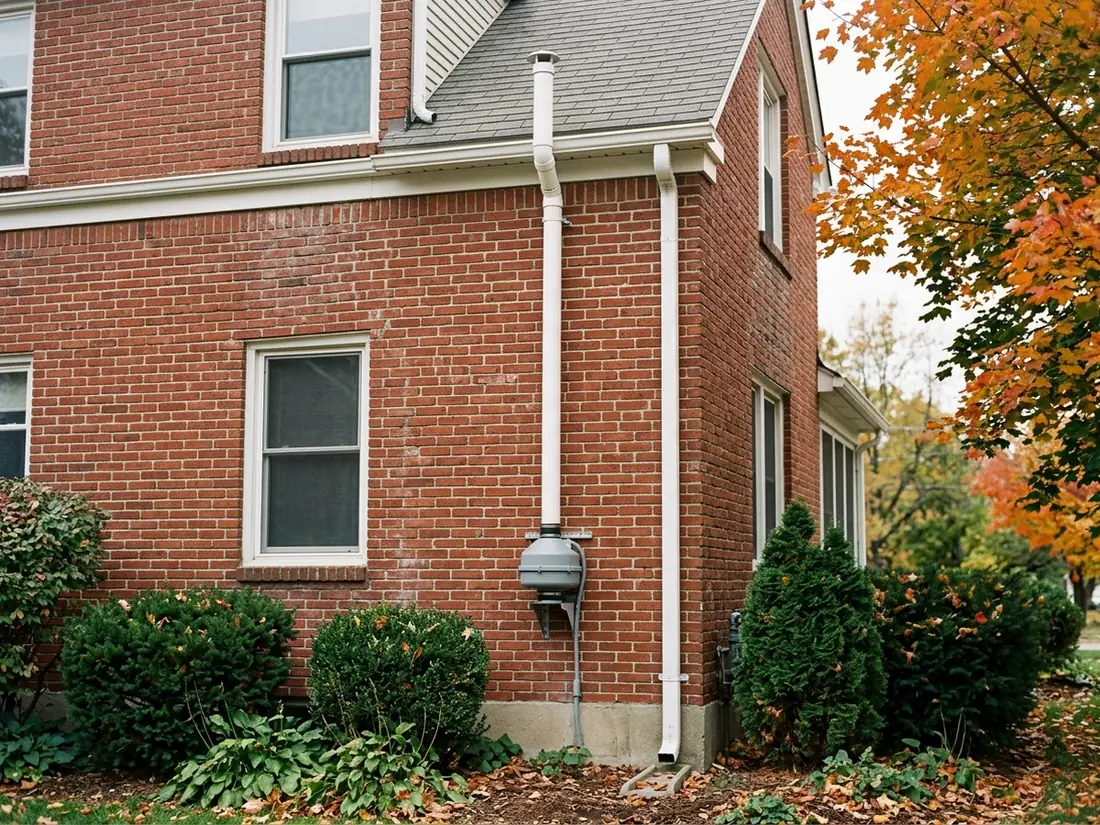
The EPA's consumer guide says the fan must not sit in or below a living area. It goes in unconditioned space such as an attic or garage, or outside the house. The exhaust has to end above the roof, at least 10 feet above the ground, and at least 10 feet from windows and doors unless it rises 2 feet above them.
Inside, the pipe has two common routes. It can rise through a closet or a framed chase to the attic, or it can run out through the rim joist to a fan on the outside wall. Either way, decide before framing. The EPA notes that a system is generally cheaper to put in before or during a renovation than after. Ask the finishing contractor to leave the pipe accessible and the gauge in view. The fan uses about as much electricity as a 60-watt bulb, roughly $70 to $80 a year according to HomeGuide.
Retesting and the System Gauge
Every active system needs a warning device: a liquid gauge (manometer), an alarm, a light or a dial, placed where it's easy to see or hear. Within 30 days of installation, and no sooner than 24 hours after the fan starts, run a two- to seven-day test, with windows and doors closed for 12 hours before and during it apart from normal coming and going. The EPA suggests an independent tester or your own kit rather than relying only on the installer's check.
If the system went in before the finishing, ask the radon contractor whether turning the space into living area could void any warranty. After the basement is finished, retest in the lowest lived-in area to confirm the construction didn't undercut the system. After that, test again at least every two years, never switch the fan off, and expect to replace it at some point. Fans may last five years or more.
Why Ann Arbor homeowners call Ann Arbor Basement Finishing
- Ask for a written estimate that names the materials
- Your request goes to one Ann Arbor contractor, not a list of callers
- Nothing to pay us: the referral is free to homeowners
- Ask the contractor about permits up front; Ann Arbor requires them for basement finishing
How Much Does Radon Mitigation Cost in Ann Arbor?
A radon mitigation system costs $1,200 to $2,000 installed, according to HomeGuide's 2026 national figures. The average is $1,600, and larger homes can pass $2,500. HomeGuide puts the permit at $25 to $150, usually included in the contractor's price. What changes the number in an Ann Arbor basement is whether the walls are block, how many suction points the slab needs, whether the sump gets a sealed lid, and how far the pipe has to travel to get outside without crossing a living space.
Who Installs Radon Systems in Michigan?
A radon mitigation specialist does, not a general finishing contractor. Michigan EGLE says radon testers and mitigators aren't licensed or regulated in the state, and it encourages hiring someone certified by the National Radon Proficiency Program (NRPP) or the National Radon Safety Board (NRSB). Ask for the certification number, and ask whether the estimate includes the post-mitigation test and the gauge. The EPA's guide says the contract should state the total cost, taxes and permit fees included, and that you should ask for written operating and maintenance instructions.
See basement bathrooms if the slab is about to be cut for drains, and basement renovation for permits on the finishing work.