
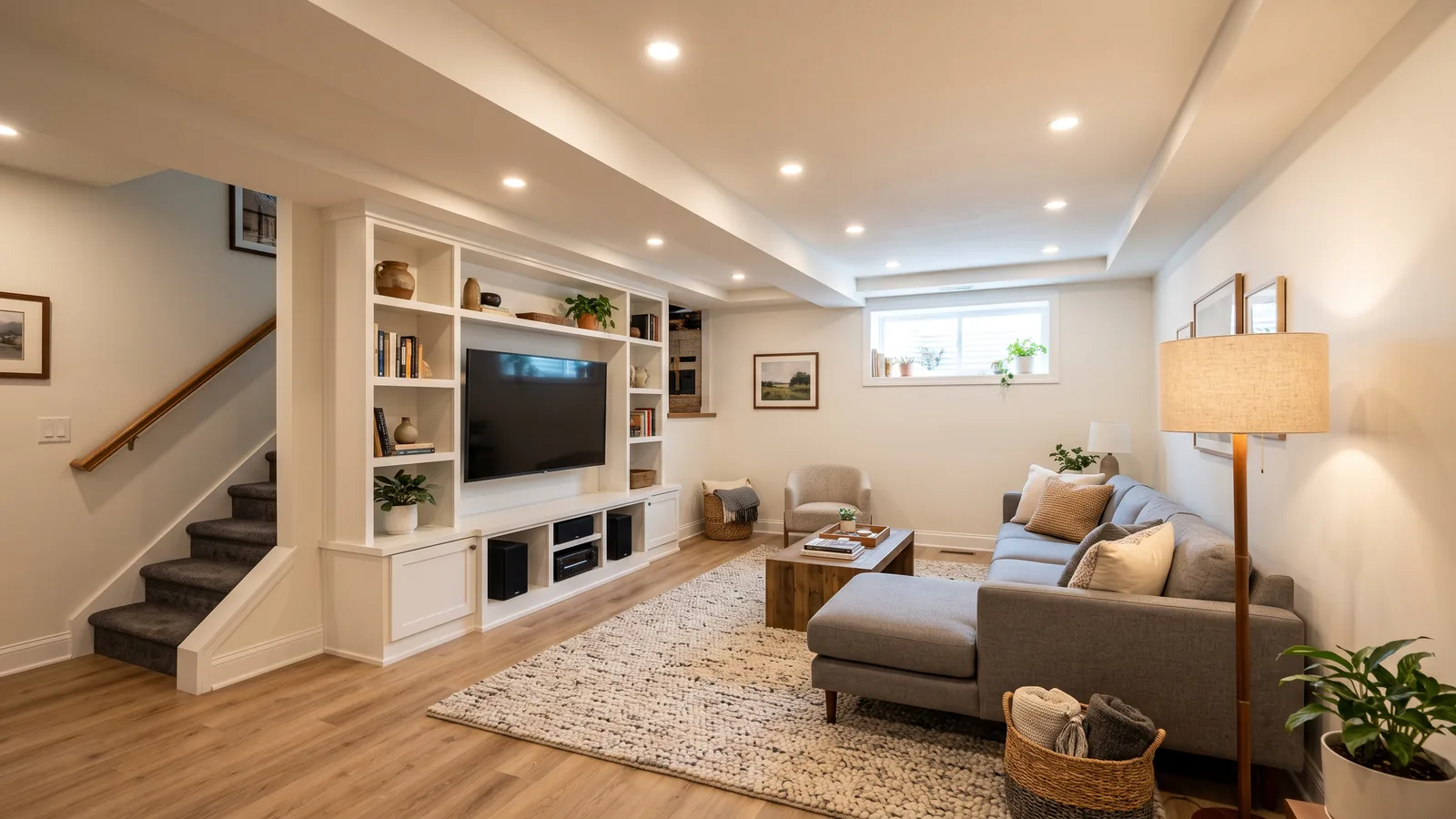
Basement Theater and Media Room Builds
A basement starts with two things a theater wants: little daylight and concrete walls set in the ground. What it lacks is a quiet ceiling, because the floor above sits on the same joists. The five types below run from a full theater to a TV wall in an open room.
Dedicated Theater Rooms with Riser Seating
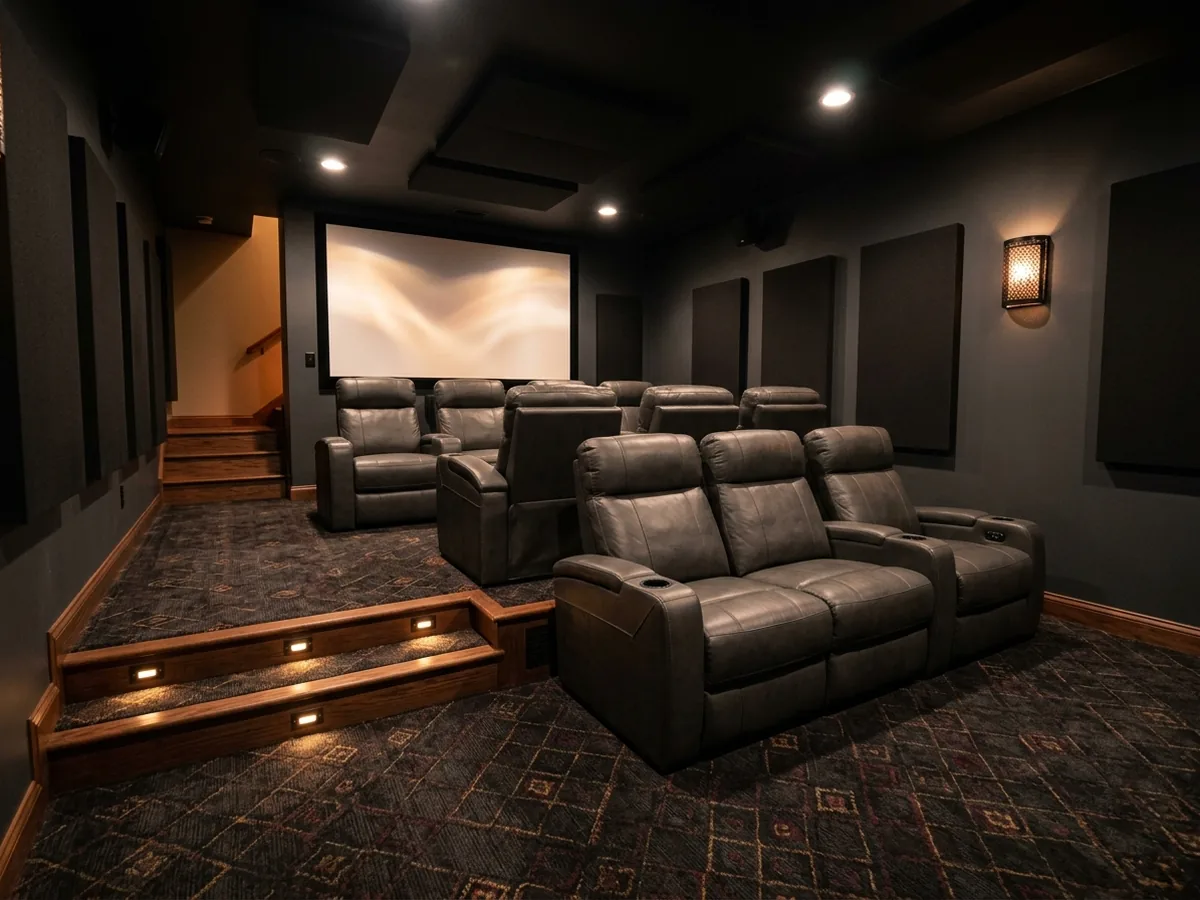
A dedicated theater is a closed room with one job: a projector or a very large screen on the short wall, two rows of recliners, and the back row raised on a carpeted platform so those viewers see over the front row. The riser is a framed platform, and it takes ceiling height away from the back row. Measure the lowest beam or duct over that row before settling on a riser height, and check it against the ceiling heights on basement ceilings. HomeGuide's 2024 guide puts a high-end home theater, with a projector, large screen, theater seating and extensive soundproofing, at $25,000 to $42,000 or more.
Media Rooms in an Open Basement
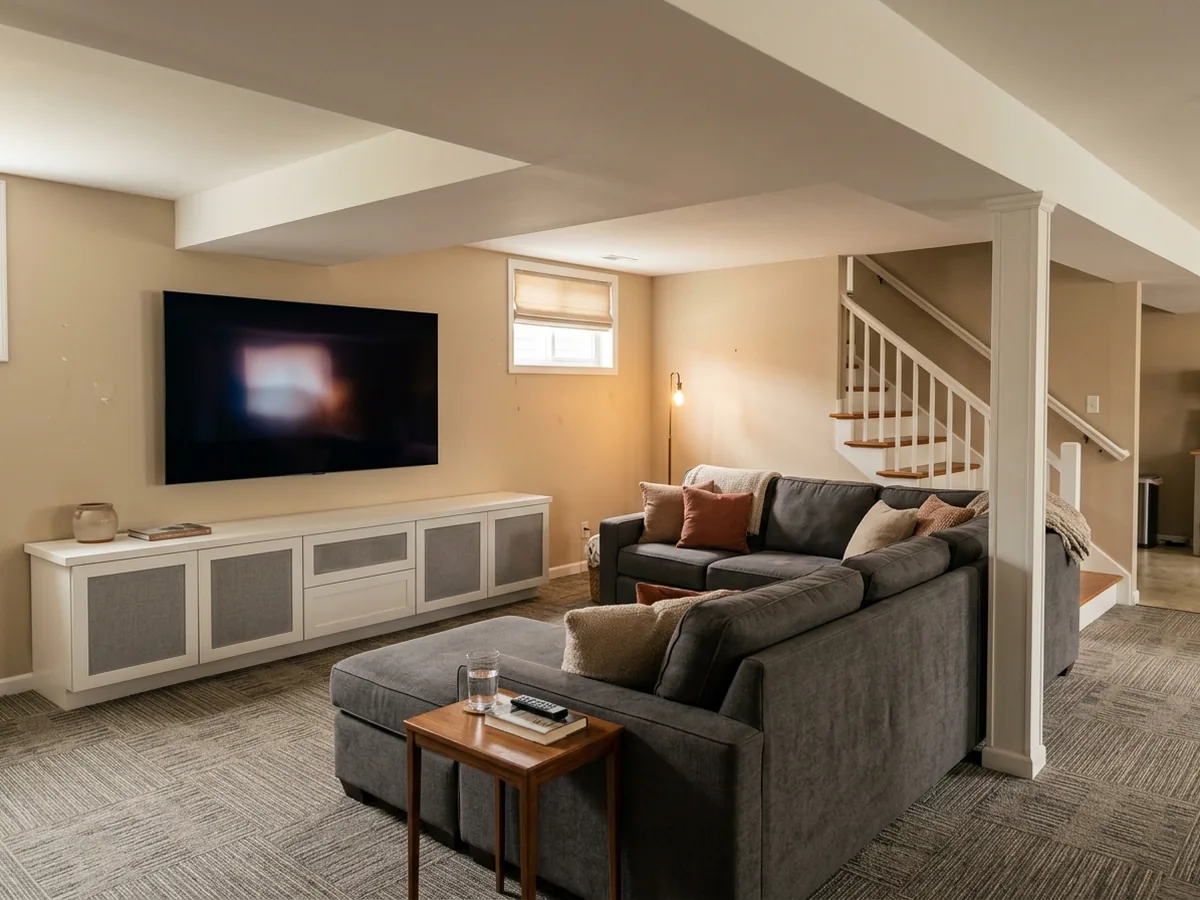
Most basements end up with a media room instead: a TV wall in the main open space, a sectional, and sound that leaks into the rest of the floor. It costs far less because there's no separate room to build, and the family room still works for everything else. HomeGuide's average home theater, $10,000 to $20,000, is in this territory: a mid-range projector or large TV, surround sound, lounge seating and moderate acoustic treatment. Put the TV on a wall that doesn't face the window, and keep the screen wall clear of the furnace room door.
Soundproofing the Ceiling and Walls
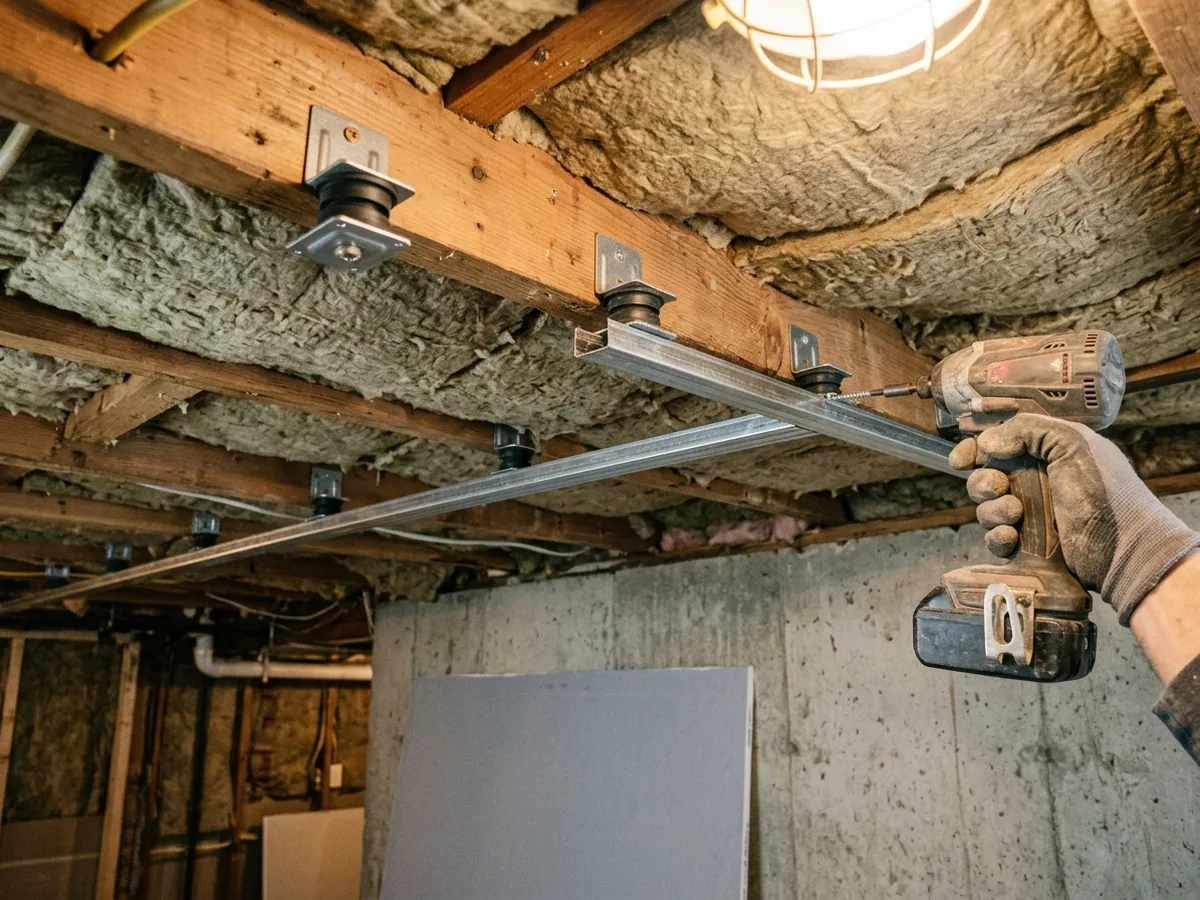
Most of the soundproofing work goes into the ceiling, since the room above shares the joists. The usual assembly:
- Insulation in the joist bays. Stone wool batts such as ROCKWOOL Safe'n'Sound come 6 inches thick for floors and ceilings and are sold for noise control in basements.
- Decoupling. Rubber isolation clips screwed to the joists hold metal hat channel, and the drywall hangs from the channel instead of the wood. The RSIC-1 clip's seller claims up to 20 points added to a wall's STC rating (sound transmission class: higher blocks more airborne sound). The clips also cut impact noise from footsteps, which is rated as IIC.
- Mass. One or two layers of 5/8-inch drywall on the clips, with seams staggered.
- Sealing the gaps. Every can light, duct boot and outlet is a hole in the assembly. Use surface-mount or sealed fixtures and acoustic caulk at the edges.
A solid-core door with a seal, and walls built the same way where they face a bedroom or an office, finish the box. HomeGuide prices soundproofing at $10 to $30 per square foot. Our view: if the budget only stretches to one surface, do the ceiling.
Pre-Wiring for Projector, Speakers and Network
Run every cable while the studs are open. That means speaker wire from the equipment spot to each speaker position, HDMI (or a conduit for one) to the projector mount, power at the projector and the screen wall, and a wired network line for streaming. HomeGuide describes a 5.1 system as six channels and six speakers and a 7.1 system as eight channels, so wire for eight positions even if you start with six. HomeGuide puts the electrical work for a home theater at $700 to $2,000. Circuits and breakers follow the rules on basement lighting and electrical.
Lighting and Dark Finishes
Light bouncing off a white ceiling washes out a projected picture. Theaters use dark matte paint on the ceiling and the wall behind the seats, carpet on the floor, and dimmable lighting: low step lights on the riser, wall sconces, a few recessed lights on a dimmer. HomeGuide prices recessed lights at $125 to $300 per can. Each can is also a hole in the soundproof ceiling, which is why sconces and step lights suit a theater.
Why Ann Arbor homeowners call Ann Arbor Basement Finishing
- Ask for a written estimate that names the materials
- Your request goes to one Ann Arbor contractor, not a list of callers
- Nothing to pay us: the referral is free to homeowners
- Ask the contractor about permits up front; Ann Arbor requires them for basement finishing
Dedicated Theater or Open Media Room: Which Should You Build?
Build a dedicated theater if you want a dark room, real volume at night, and a projector-size picture, and you have a corner of the basement that can be closed off. Build an open media room if the space also has to be the family room and the budget is nearer the average figure above than the high end. A middle path is a media room with a soundproofed ceiling over the seating area only.
What a Basement Theater Estimate Should List
The estimate should name the ceiling assembly layer by layer (insulation, clips and channel, drywall layers), the door, the riser size, each circuit, every cable run and its end point, and the lighting. Ask whether the AV equipment is in the price or only the room and its wiring. Some quotes cover only the room, with the screen and speakers left to an AV installer.
Next to a theater, people often add a game room, a golf simulator or a basement bar at the back of the room.