
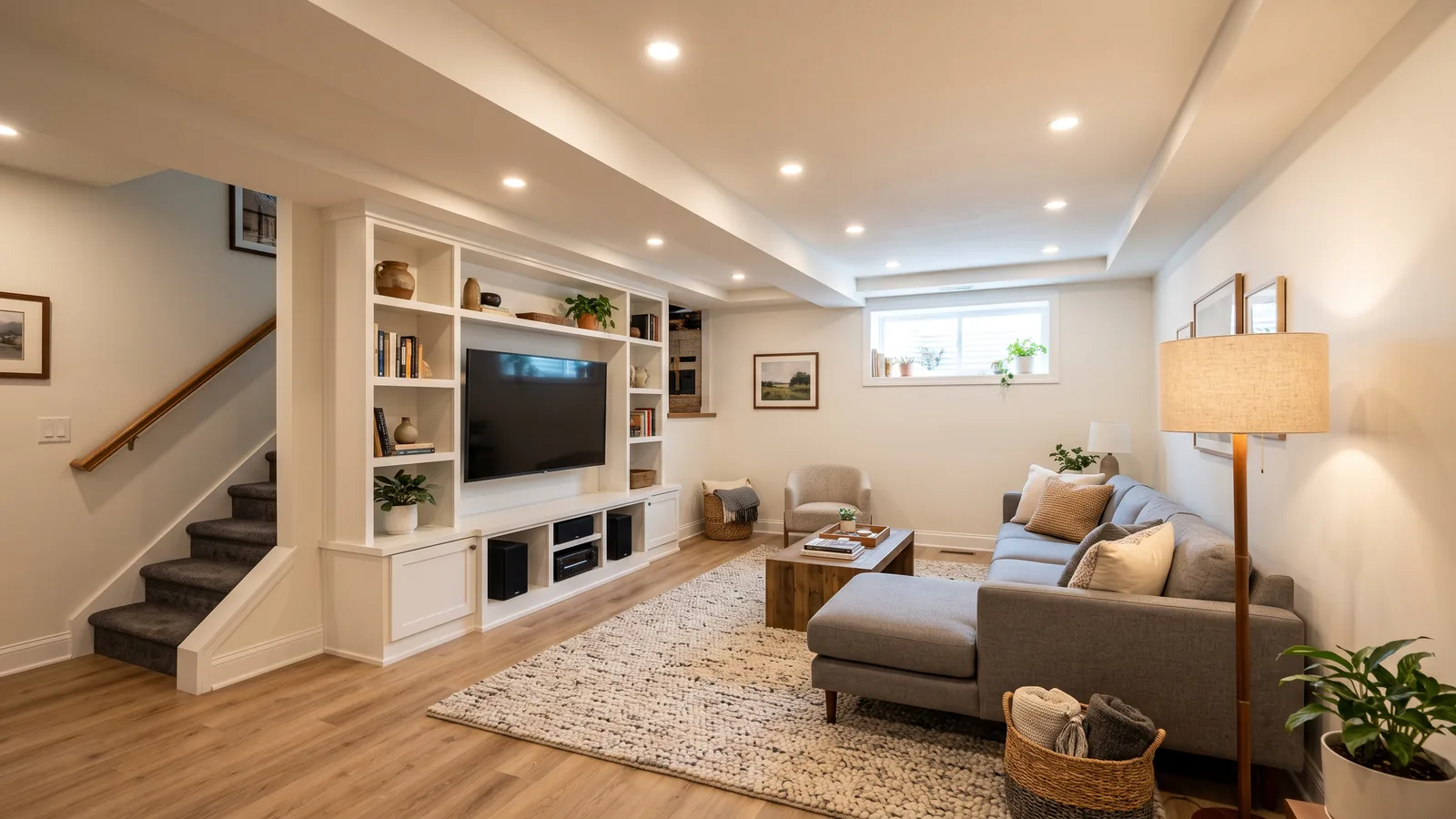
Basement Kitchen Layouts and What Goes Into Each
A basement kitchen and a wet bar can look alike in a photo, but they're priced and permitted differently. A bar is a sink and a beverage fridge (basement bars in Ann Arbor has those layouts). A kitchen has cooking on it, and cooking brings in venting, bigger circuits and often gas.
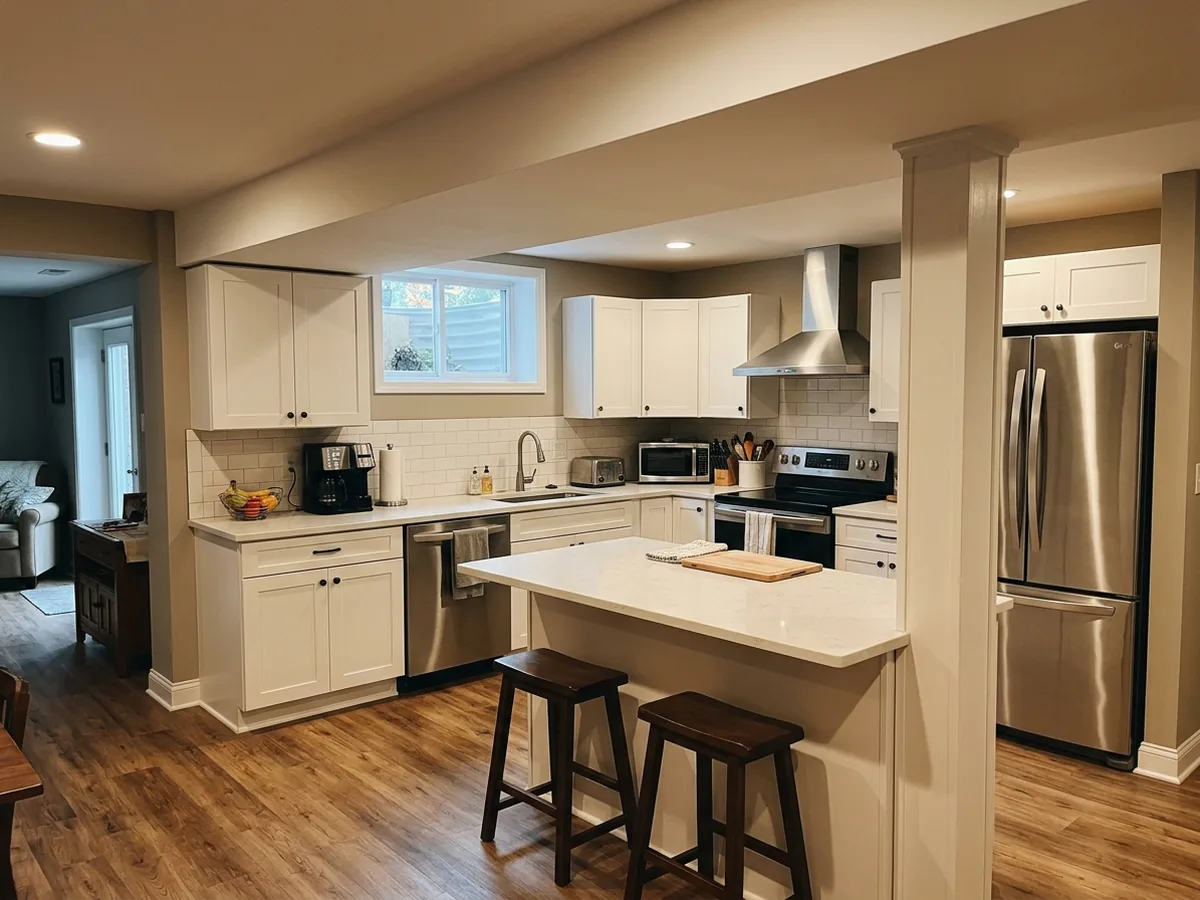
Full Second Kitchens
A full second kitchen has a range or cooktop and oven, a full-size refrigerator, a dishwasher, and enough counter to prep a holiday meal. It can be the overflow kitchen for hosting, or the everyday one for households where a grown kid or a parent lives downstairs. Plan it like an upstairs kitchen: a work triangle between sink, range and fridge, landing space on both sides of the range, and a spot for the trash and recycling. The difference is everything the room sits in: posts and a steel beam to lay out around, ductwork overhead, and one or two small windows at most.
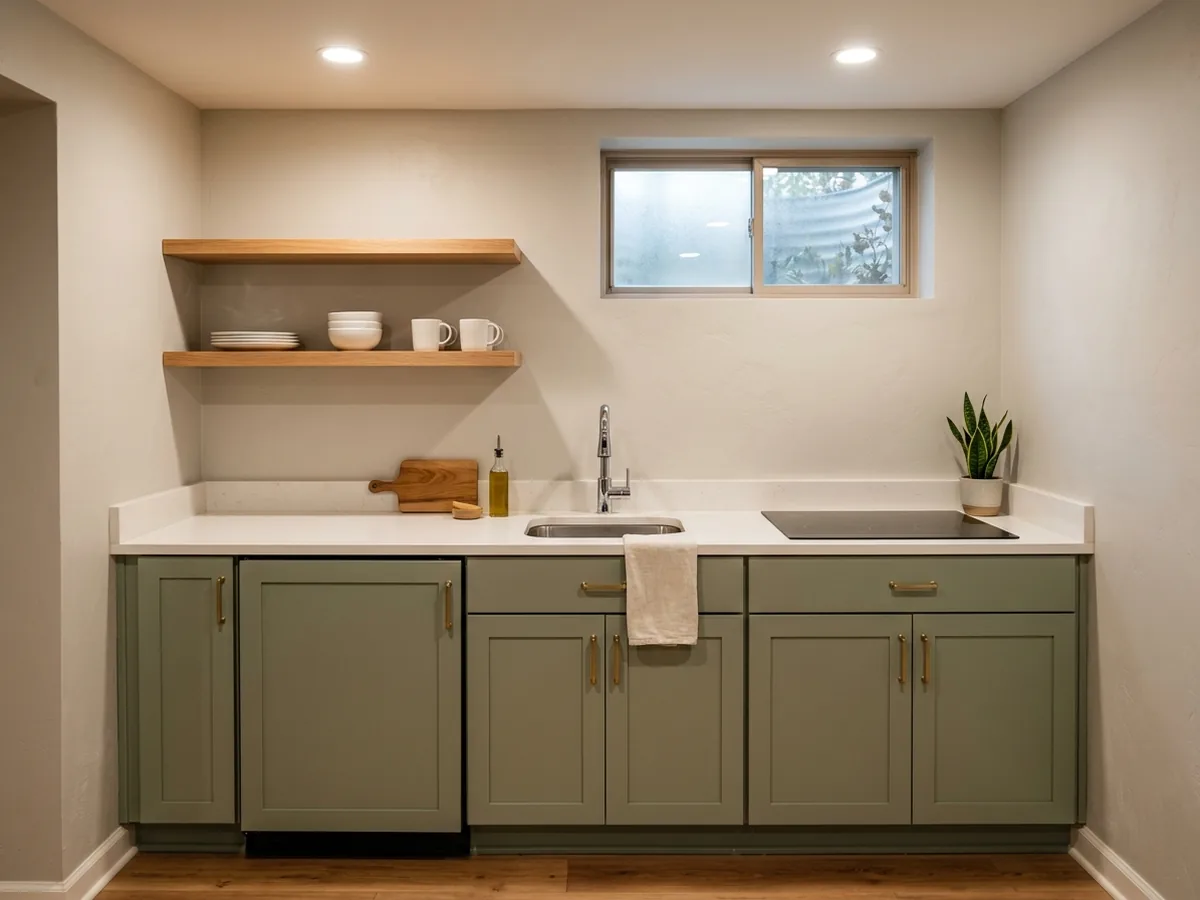
Kitchenettes for Guests and In-Laws
A kitchenette is the short version: one run of cabinets, a sink, an under-counter or apartment-size fridge, a microwave and maybe a two-burner cooktop. It's what most guest suites need. If the kitchenette serves a separate living unit, the rental and in-law rules come in; those are on the basement in-law suite page.
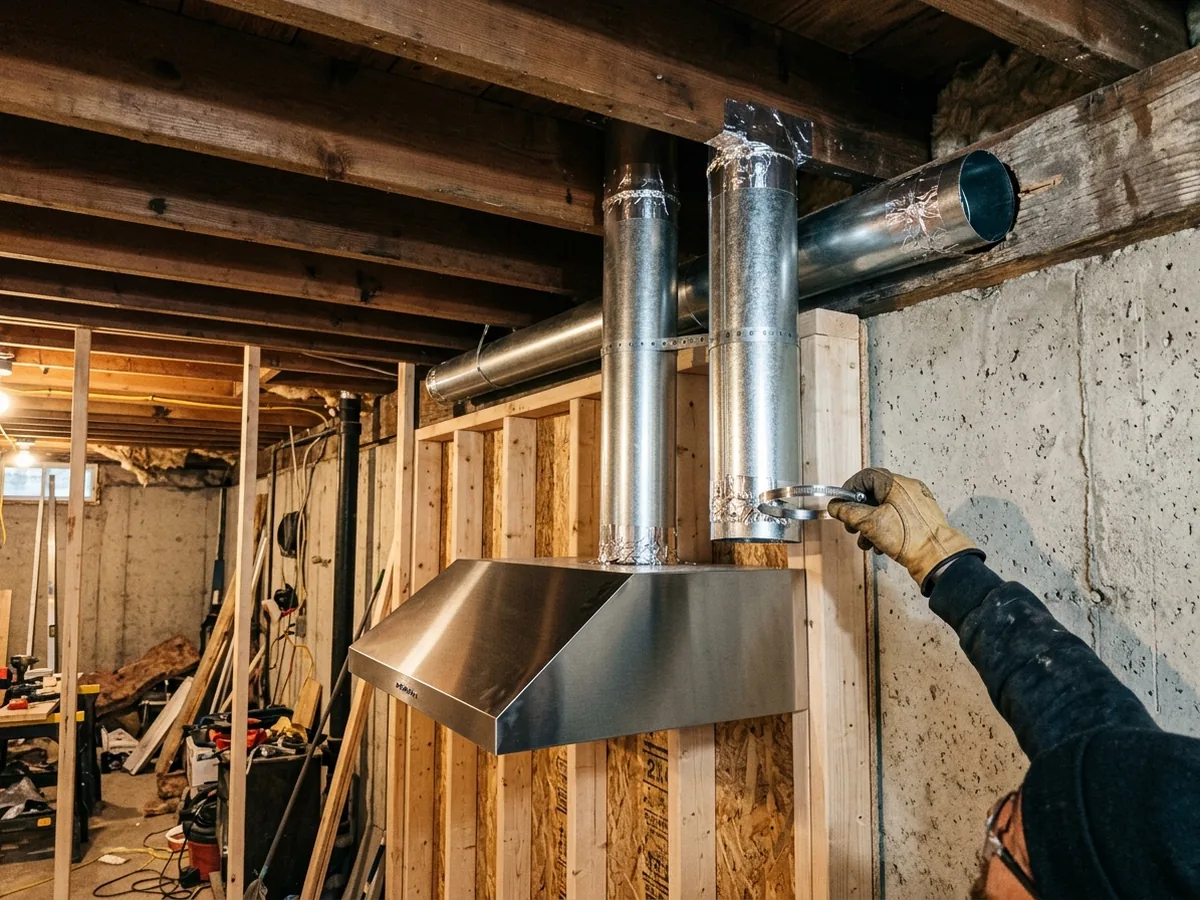
Range Hoods and Venting Below Grade
Michigan's residential code says range hoods discharge to the outdoors through their own duct: smooth inside, airtight, with a backdraft damper, never ending in a crawl space or inside the house. The duct has to be galvanized steel, stainless or copper. In a basement that usually means a run between the floor joists to a wall cap in the rim joist, so look at where the joists run before you place the range. A listed ductless hood is allowed when it's installed to the maker's instructions and the room has other ventilation. The code sets kitchen exhaust at 100 cfm intermittent. A hood that can pull more than 400 cfm needs makeup air at roughly the same rate, with a damper. On a big hood, budget for that second duct.
Appliance Circuits and Gas Lines
The electrical code asks for at least two 20-amp circuits for kitchen countertop receptacles. An electric range rated 8.75 kVA or more needs a circuit of at least 40 amps. Add a dishwasher, a disposal and a microwave and the panel fills up fast, so ask the contractor to check spare capacity at the first visit. A gas range means a new branch off the house gas line, done by a licensed trade under its own permit. Ann Arbor's trade permits are on the basement renovation page. Breaker protection for the kitchen circuits is covered on basement lighting and electrical.
Cabinets and Counters on a Concrete Floor
A slab poured around a floor drain isn't always level, and concrete keeps giving off moisture. Ask how the base cabinets will be shimmed and whether they sit on the finished floor or on the slab with the floor run up to them. Cabinet bases with a raised toe-kick or plastic legs keep particleboard off a floor that might get wet. Quartz and solid-surface counters don't mind damp air. Butcher block needs sealing. The sink drain is the other floor question: if the sewer line leaves the house above the slab, the sink needs a pump, and basement bathrooms explains the drain options.
Why Ann Arbor homeowners call Ann Arbor Basement Finishing
- Ask for a written estimate that names the materials
- Your request goes to one Ann Arbor contractor, not a list of callers
- Nothing to pay us: the referral is free to homeowners
- Ask the contractor about permits up front; Ann Arbor requires them for basement finishing
What Does a Basement Kitchen Cost in Ann Arbor?
HomeGuide's February 2026 national guide puts a basement kitchen or kitchenette at $5,000 to $20,000, with custom work and premium materials costing more. Our view: the cabinets and appliances are the visible part of the bill, but in a basement the hidden lines (hood duct, new circuits, sink drain, gas branch) decide where in that range a quote lands.
From the same guide:
Cabinets
$150 to $500 per linear foot installed for stock or semi-custom, $500 to $1,200 for custom.Appliances
$2,500 to $6,800 for a full set installed.Sink and faucet
$380 to $1,400 for the sink installed, plus $250 to $600 for the faucet.
These are national figures, not Ann Arbor quotes. For what a whole basement costs, see the Ann Arbor basement finishing overview.
What Should a Basement Kitchen Estimate List?
A written estimate for a basement kitchen should name the hood and its duct route to the outside, each new circuit and its amperage, how the sink drains (gravity or pump), whether a gas line is included, the cabinet line and counter material, and which permits the price covers. If a line is missing, ask about it before you sign; those are the items most likely to turn into a change order.
Planning a smaller setup? Compare basement wet bars in Ann Arbor. A kitchen next to a basement wine cellar or a basement game room is a common pairing.