

Basement Dehumidifier Options Before and After You Finish
The EPA's mold guide is blunt: "The key to mold control is moisture control". A basement that's about to get drywall and carpet should be dry first, then kept dry, and a dehumidifier does the second part.
Whole-House Ducted Dehumidifiers
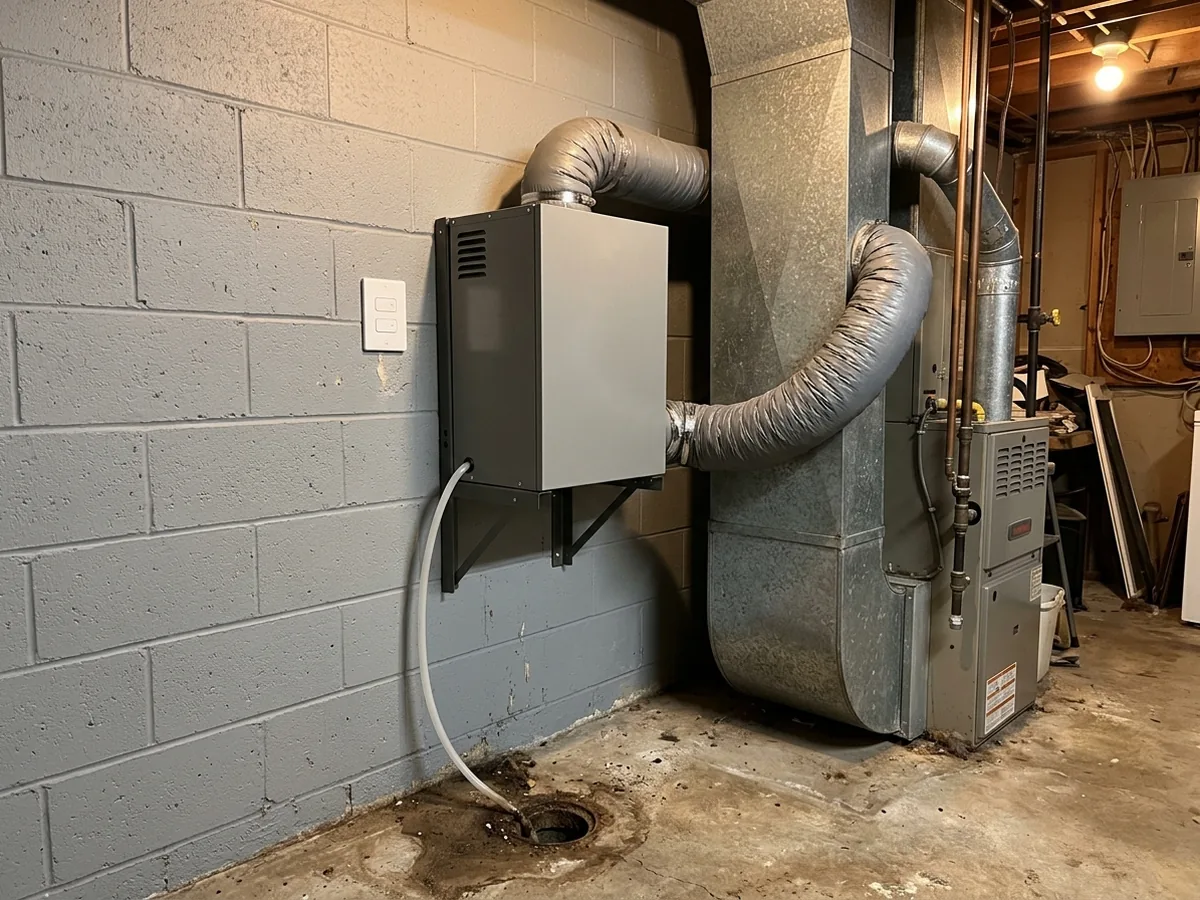
A whole-home dehumidifier is a permanent unit that uses the house's air ducts to dry one or more rooms. ENERGY STAR says these units are worth considering in relatively well-sealed homes with central air that see humidity above 55% consistently throughout the house, and that they should be sized and installed by an HVAC professional. Installation typically covers the duct connections, power, a drain line and a wall control. It's mechanical work, so ask whether it needs its own permit; in Ann Arbor, mechanical work under a building permit carries a separate permit and inspection.
Standalone Units with a Drain Line
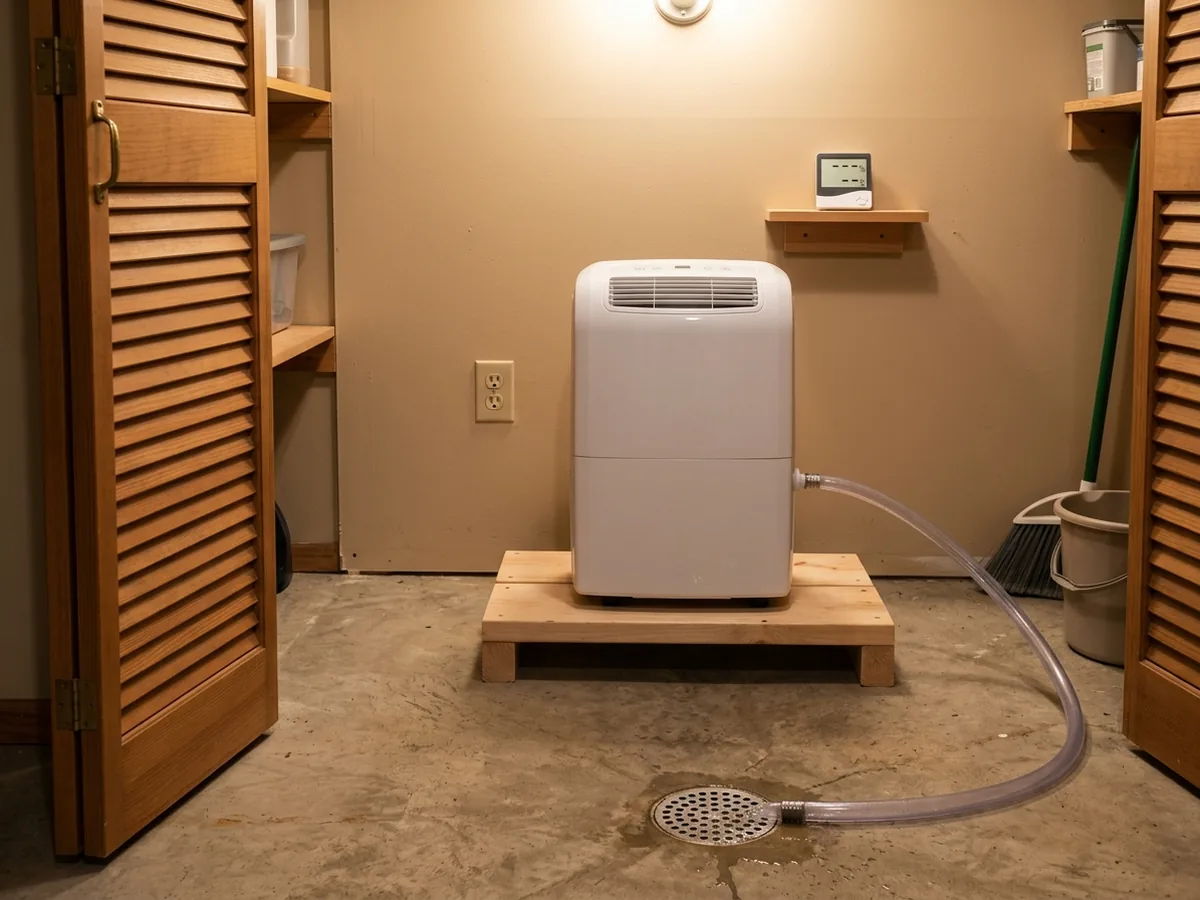
A portable dehumidifier sits in one room and collects water in a bucket or, better, drains through a hose to a floor drain or the sump. In a finished basement the easy upgrade is to plan its spot: a closet or utility-room corner with a receptacle, a louvered door, and a drain within reach. Units without a gravity path can pump water up and out. ENERGY STAR-certified dehumidifiers are 20% more efficient than non-certified models, and efficiency is rated in liters removed per kilowatt-hour.
Humidity Targets in a Finished Basement
The EPA says to keep indoor humidity below 60%, ideally between 30% and 50%. ENERGY STAR gives the same 30% to 50% optimum, and 30% to 40% in cold climates during the heating season to avoid window condensation. A hygrometer near the unit tells you whether it's keeping up. If the reading sits above the target with the unit running constantly, it's undersized, or the moisture is coming from somewhere it can't fix.
Where the Condensate Goes
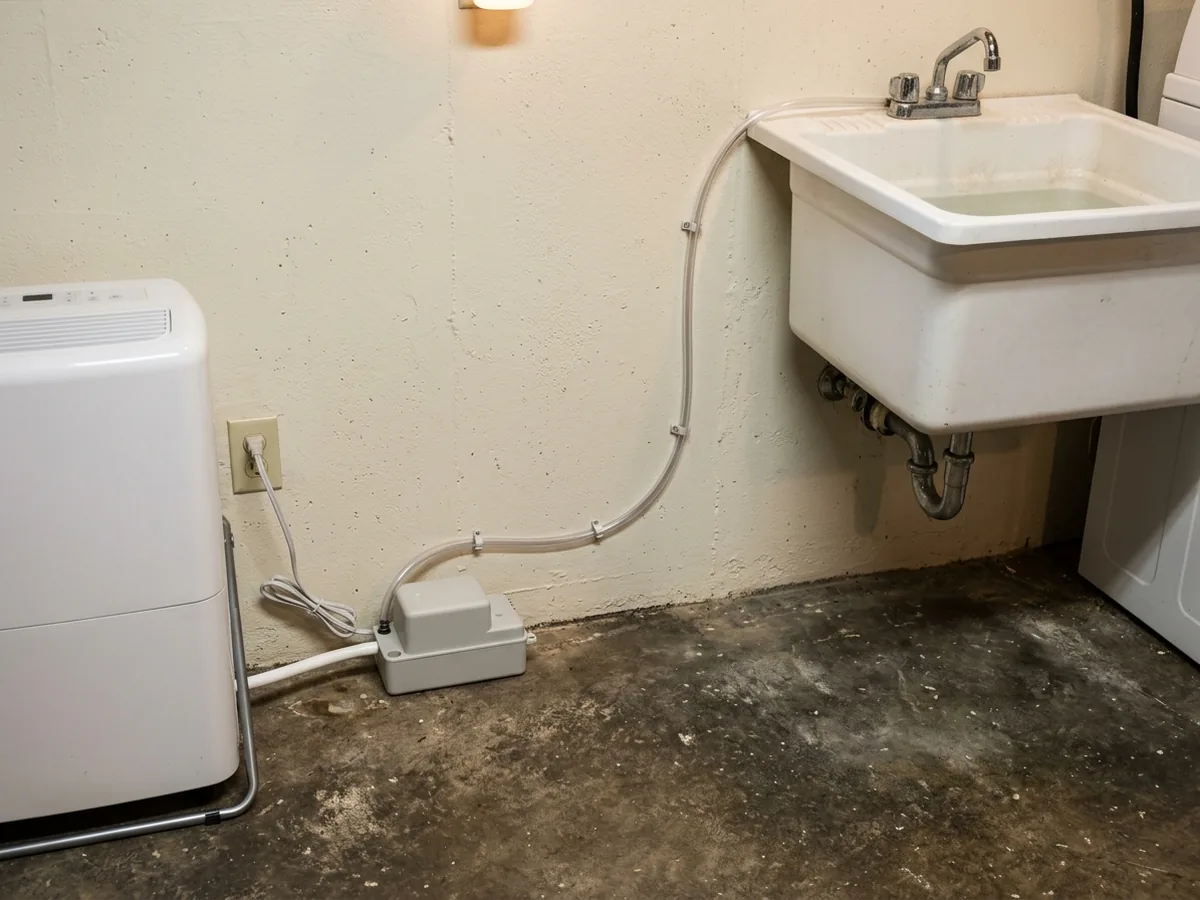
The water has to go somewhere approved. The model mechanical code behind Michigan's 2021 mechanical code says condensate drains can't connect directly to a plumbing drain, waste or vent pipe, and can only discharge into fixtures such as a floor drain, floor sink, standpipe, utility sink or laundry sink. Drain pipe needs a slope of at least 1/8 inch per foot and, for typical equipment, a 3/4-inch minimum size. Where an overflow could damage the finished room, the code calls for a backup: a secondary drain, an overflow pan or a float switch that shuts the unit off. ENERGY STAR notes most whole-home units have only a drain, routed to a floor drain or a condensate pump.
When the Problem Is Water, Not Humidity
A dehumidifier dries air. It won't stop water. DOE's basement guidance says to check walls for water intrusion and deal with it first, and to direct bulk water away from the foundation. The city of Ann Arbor lists heavy storms, spring snowmelt and groundwater as causes of basement flooding, plus poor yard drainage, and its handout wants downspouts to release water 3 feet or more from the house, ground that falls 6 inches within 10 feet of the foundation, and plantings kept 12 inches back from the wall.
The city says many Ann Arbor homes have footing drains connected straight to the sanitary sewer. Its footing drain disconnection program, which reroutes them to a sump pump, had completed about 2,800 disconnections since 2001, according to a city Q&A last updated in 2014. If your house has one of those sumps, the city notes the owner is responsible for maintaining it. Seepage at the cove joint, wet cracks or a sump that runs constantly is a job for a waterproofing contractor, hired before any finishing starts. Insurance is worth a look too: the city says flood coverage often isn't in a standard homeowners policy and may need a rider. If water has already soaked carpet or drywall, the EPA's rule is to dry it within 24 to 48 hours to prevent mold.
Why Ann Arbor homeowners call Ann Arbor Basement Finishing
- Ask for a written estimate that names the materials
- Your request goes to one Ann Arbor contractor, not a list of callers
- Nothing to pay us: the referral is free to homeowners
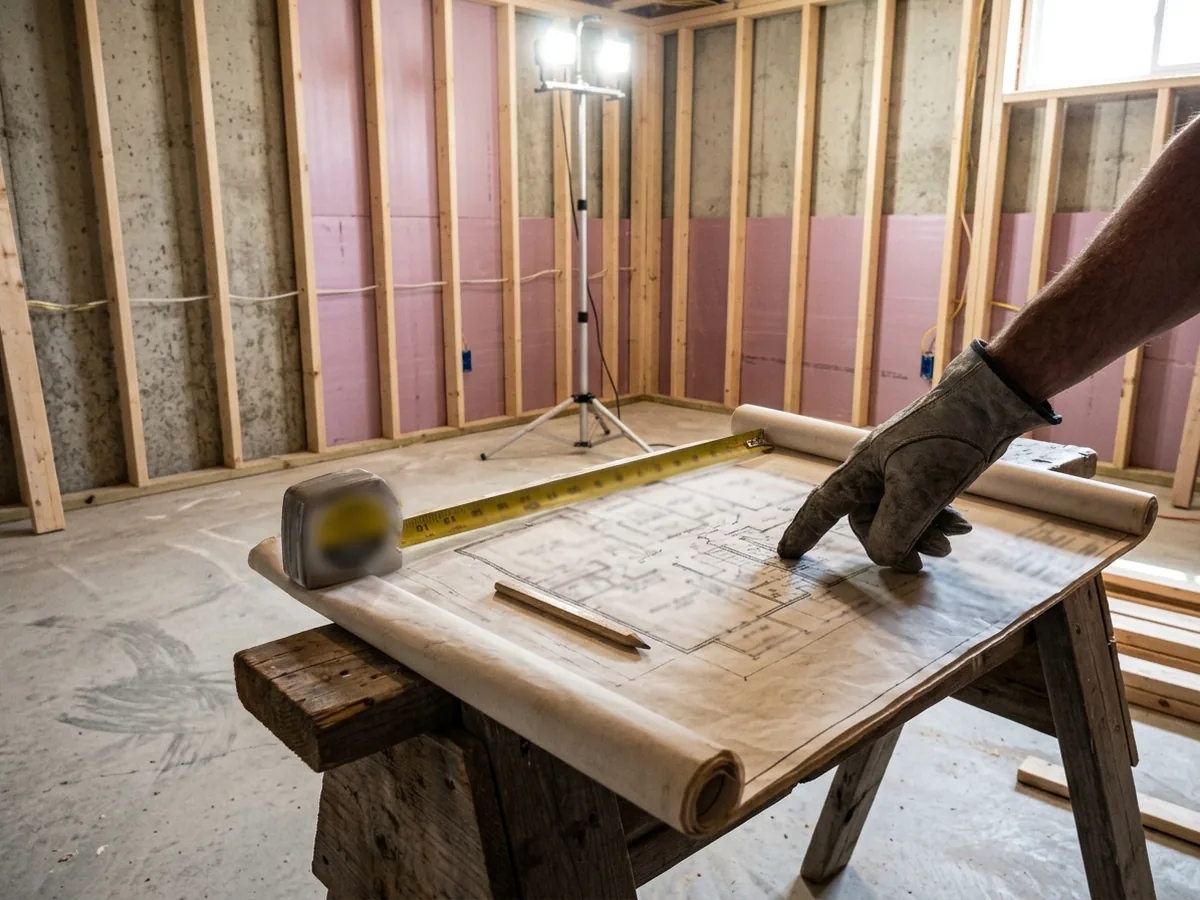
- Ask the contractor about permits up front; Ann Arbor requires them for basement finishing
What Size Dehumidifier Does a Basement Need?
Capacity is rated in pints per 24 hours, and ENERGY STAR sizes it by how damp the space is. For an area under 2,000 square feet:
| Condition without a dehumidifier | Recommended capacity |
|---|---|
| Slightly to moderately damp, musty at times (50-75% RH) | 20-30 pints/day |
| Very damp, damp spots on walls and floor (75-90% RH) | 25-40 pints/day |
| Wet, walls or floor sweat or seep (90-100% RH) | 30-50 pints/day |
Larger spaces need more, and ENERGY STAR's advice is that "it's better to oversize than undersize". The "wet" row is the one to read twice: sweating walls or seepage means water work comes first.
What Should a Dehumidifier Quote Include?
The unit
Whole-house or standalone, its capacity in pints per day, and whether it's ENERGY STAR certified.- Where it sits and how it's powered.
The condensate route
Gravity line, pump, and where it discharges.- For a ducted unit, the duct connections, the control and any mechanical permit.
- An overflow safeguard if it sits above a finished floor.
Related pages: basement insulation, which keeps humid air off cold concrete; radon mitigation; and basement finishing in Ann Arbor.