
Wine Cellar Types for an Ann Arbor Basement
Cellar equipment sellers publish the storage targets. Vinotemp's cooling keeps a cellar at about 55 to 60°F and 50 to 70% humidity, and Vintage Cellars gives 55 to 58°F at the same humidity. Those are vendor figures, and they decide how the room is built.
Climate-Controlled Wine Cellars
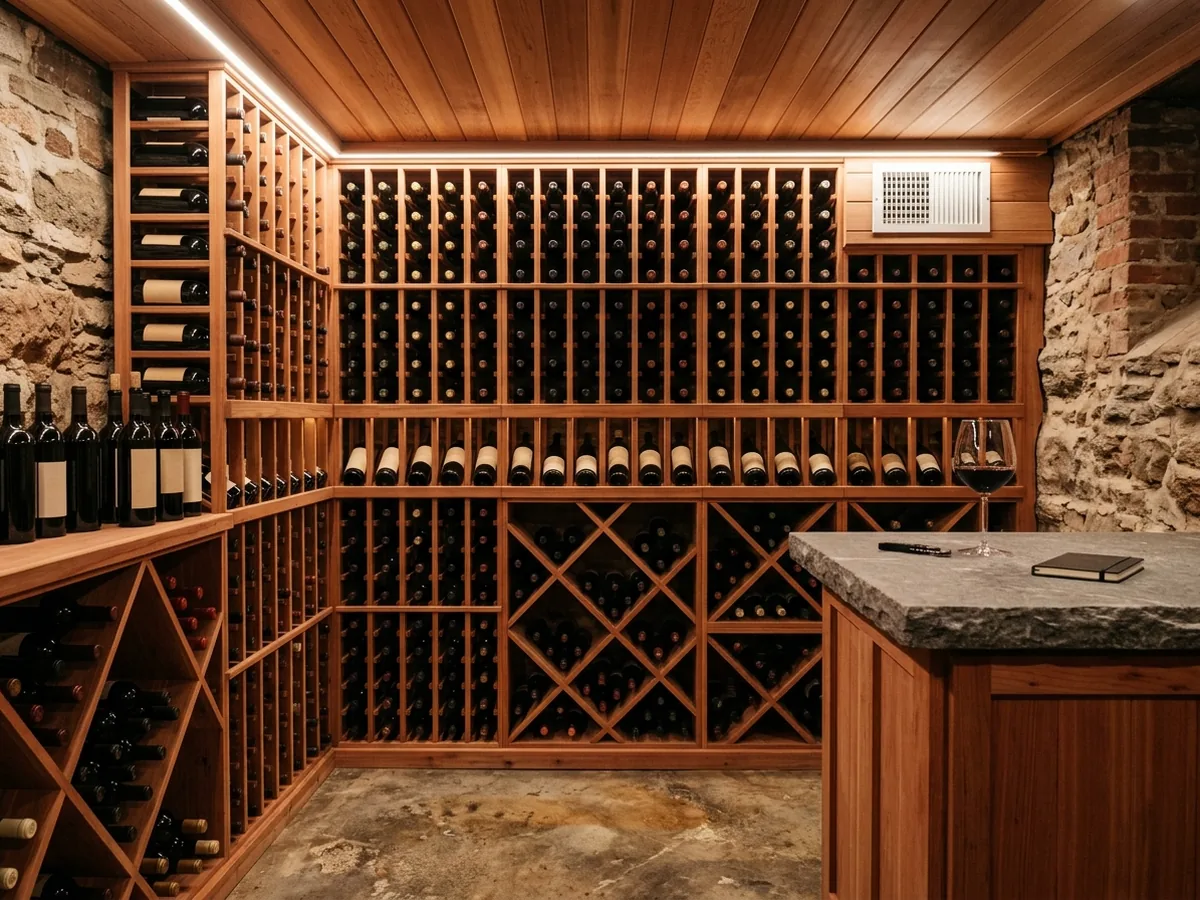
A climate-controlled cellar has a cooling unit that holds temperature and humidity all year. For cellars under 2,000 cubic feet, Vinotemp offers either a split system or a through-the-wall unit. Vintage Cellars sizes the cooling by the room's volume (width times depth times height), the local climate and the R-values of the walls, so a better-insulated cellar can use a smaller unit. Ask where the unit exhausts its heat and whether it needs a drain line, then place the cellar where the power, the drain and the exhaust are easy to run.
Passive Cellars in a Cool Corner
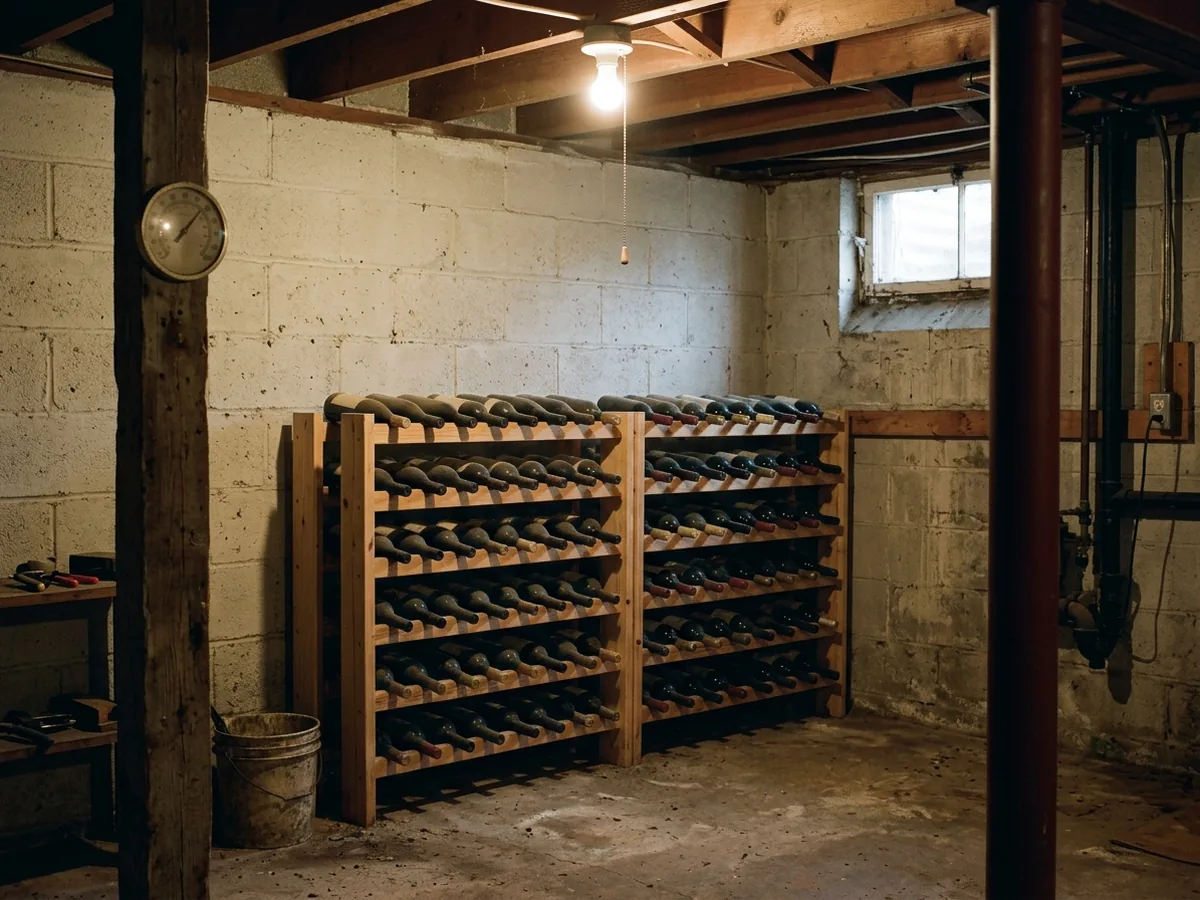
A passive cellar has no cooling unit. It relies on the ground around the basement to keep the room cool. Vinotemp describes below-grade cellars as sitting at "about 55 degrees" from ground temperature. That's a vendor's general statement, not a reading from your basement. Our view: before building a passive cellar, put a thermometer and a humidity gauge in the corner you have in mind and read them through a summer and a winter. A corner on the north side, away from the furnace and the water heater, has the best chance. If the summer reading runs warm, frame and insulate the room as if for cooling, so a unit can be added later without rebuilding.
Glass-Walled Wine Rooms
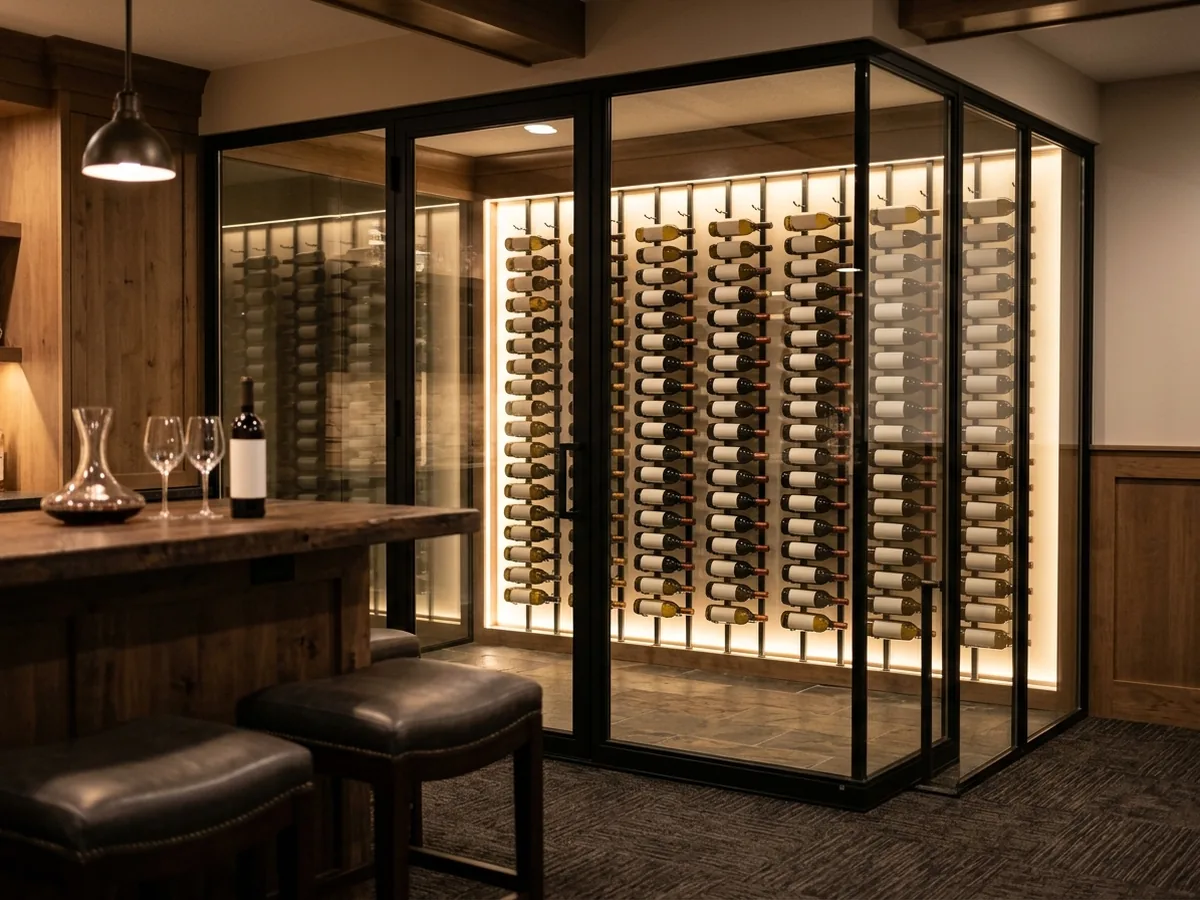
A glass wine room shows the bottles from the bar or the family room. Glass insulates far less than a framed, insulated wall, so the cooling has to be sized for it. Vintage Cellars asks for dual-pane insulated glass on glass doors and a correctly sized cooling system, and recommends keeping windows out of a cellar where possible. Keep the glass out of direct light from a window or a bright fixture. A basement bar next to the wine room shares the plumbing and the lighting plan.
Racking: Wood, Metal and Display
Racking is what fills the cellar, so count bottles before the room is framed. Wood racking is often redwood, and Vintage Cellars suggests redwood or another rot- and mildew-resistant wood for tongue-and-groove wall paneling to match the racks. Metal peg racks hold bottles label-out for a modern look. Display rows, bulk bins for cases, and a small tasting counter all take wall length from storage. Ask for a rack layout drawing with the bottle count; it's the easiest way to compare two quotes.
Vapor Barrier, Insulation and Door Seal
This is the part that makes a cellar a cellar, and it runs against usual basement practice. Cellar vendors call for plastic sheeting on the warm side of the insulation: 6-mil per Vinotemp, 6 or 8 mil per Vintage Cellars, which warns that plastic on the cellar side will collect condensation. Vigilant calls for 2x6 framing, R-19 to R-30 in the walls and R-30 to R-45 in the ceiling, with 6-mil polyethylene or sealed rigid foam and every joint taped. On a concrete floor, Vintage Cellars asks only for a sealer. The door has to be exterior grade, 1¾ inches thick, weatherstripped on all four sides with a bottom sweep, per Vinotemp.
On a foundation wall the warm-side rule needs care: general basement guidance warns against plastic that traps moisture against concrete. Ask the contractor how the cellar's exterior walls will dry. The basement insulation page explains the foam-on-concrete approach.
Why Ann Arbor homeowners call Ann Arbor Basement Finishing
- Ask for a written estimate that names the materials
- Your request goes to one Ann Arbor contractor, not a list of callers
- Nothing to pay us: the referral is free to homeowners
- Ask the contractor about permits up front; Ann Arbor requires them for basement finishing
Where Should the Cellar Go in the Basement?
Our view: put it where the walls do the least fighting. A cellar framed against two foundation walls gets the coolest surfaces but brings in the moisture question above. A cellar built from interior partitions is simpler to insulate and seal, but every wall faces the warmer house. Either way, keep it away from the furnace, the water heater and the dryer vent, leave room to service the cooling unit, and plan the bottle count so the room isn't larger than the collection needs. Every extra cubic foot is space the cooling has to handle.
What Does a Basement Wine Cellar Cost?
HomeGuide's 2023 home bar guide puts a custom wine cellar at $300 to $500 or more per square foot, and a prefab wine cellar system at $1,600 to $8,000. The cooling unit, the door and the racking are the big lines. A written estimate should list each one, along with the insulation R-values, the vapor barrier and its side, and which permits are included. For the cost of a whole finished basement, see the Ann Arbor basement finishing overview.
For the rooms around a cellar, see basement kitchens and basement game rooms.